

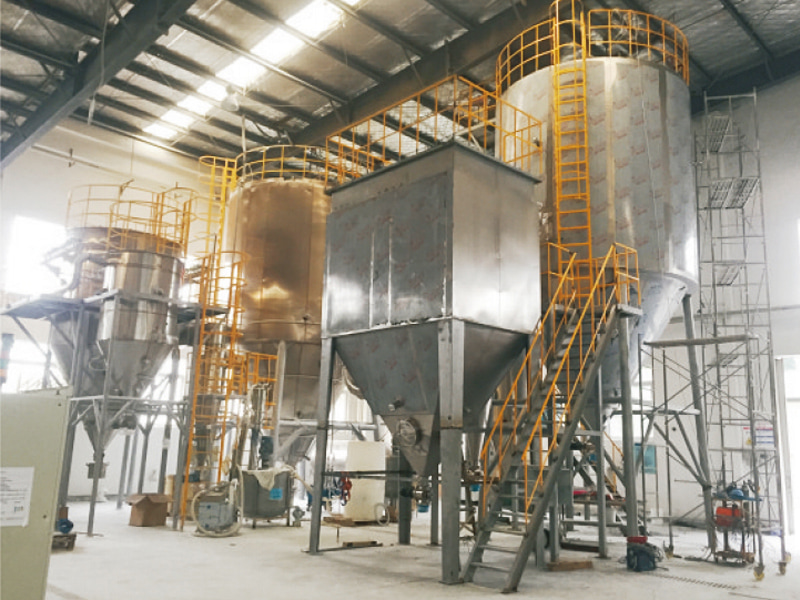
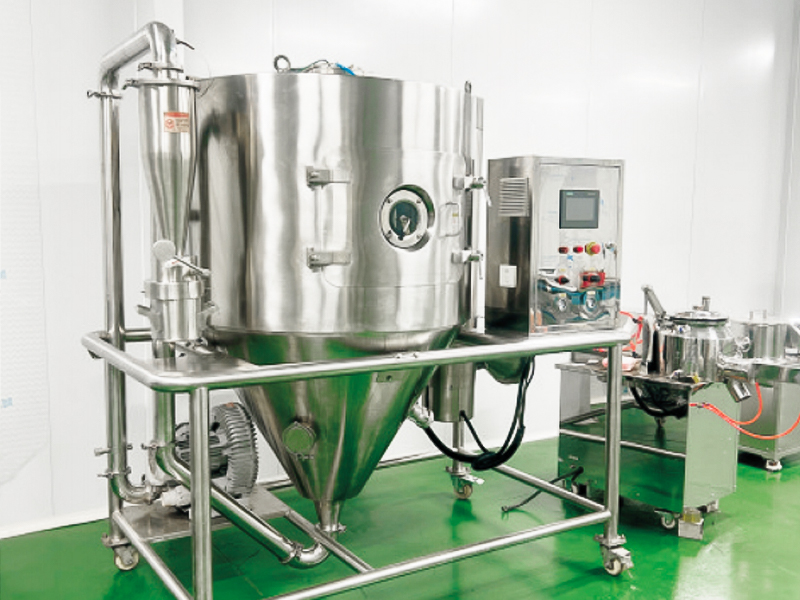
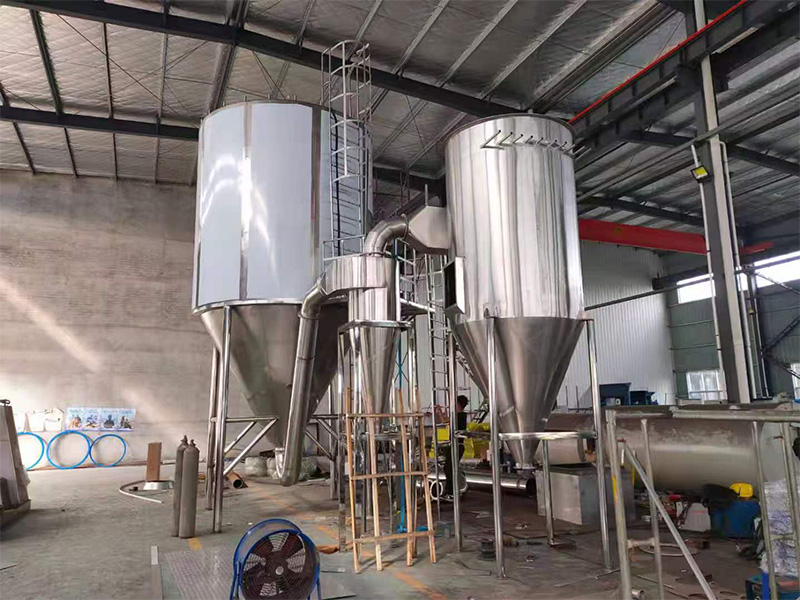


The high speed centrifugal spray dryer is widely used in industrial drying processes for converting pumpable solutions, emulsions, suspensions, and pastes into fine powders, granules, or other solid products. As an efficient liquid-to-powder processing technology, centrifugal spray drying enables rapid moisture evaporation through the contact between atomized droplets and heated air.
This advanced industrial spray drying equipment is suitable for applications requiring precise control over final particle size distribution, residual moisture content, bulk density, and powder morphology. By adjusting atomization speed, inlet and outlet air temperatures, and feed rate, the spray drying process can be optimized according to different material characteristics and product specifications.
For manufacturers in the food, pharmaceutical, chemical, and ceramic industries, a centrifugal spray dryer provides a flexible and efficient solution for continuous powder production and industrial-scale drying operations.
A high speed centrifugal spray dryer is a type of industrial spray drying equipment that uses a rotating atomizer to transform liquid feed into fine droplets.
Unlike conventional drying methods that rely on prolonged heating, centrifugal spray drying increases the surface area of the liquid material through atomization. The droplets then exchange heat and mass with heated air inside the drying chamber, allowing moisture to evaporate rapidly.
The resulting powder is separated from the exhaust air through a powder collection system, typically involving cyclone separators and additional dust collection equipment when required.
The LPG series centrifugal spray dryer is designed for industrial applications where manufacturers need to process pumpable liquid materials into powder while controlling particle characteristics, residual moisture, and production capacity.
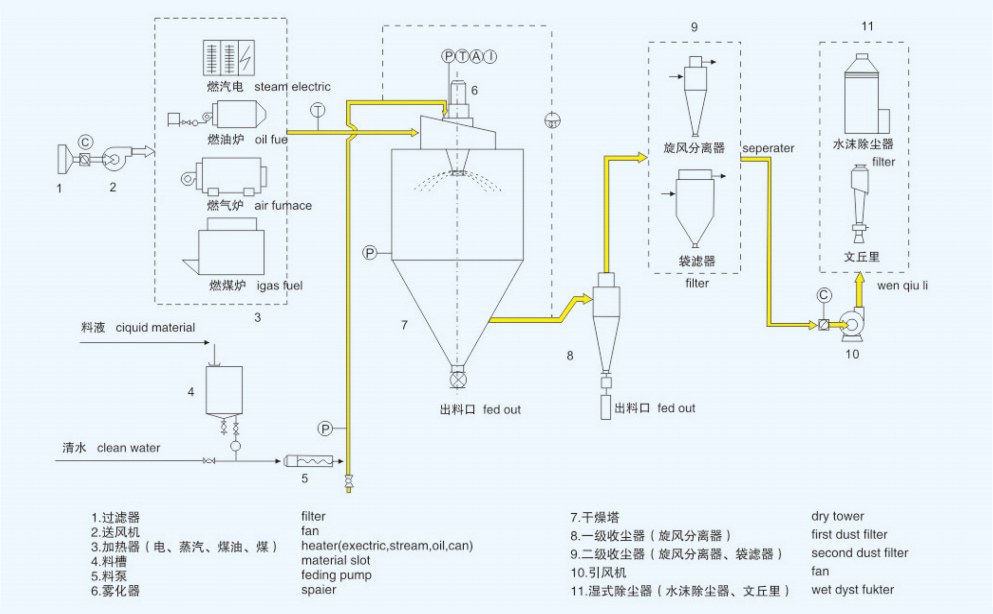
Air is heated via an air filter and heater, then flows into the hot‑air distributor at the top of the drying chamber, entering the chamber in a spiral pattern.
Meanwhile, raw‑material liquid is pumped through a filter to the centrifugal atomizer mounted on the top of the drying chamber, where it is atomized into fine droplets. The feed liquid makes direct co‑current contact with hot air; moisture evaporates quickly, and the material is dried into finished product within a very short period.
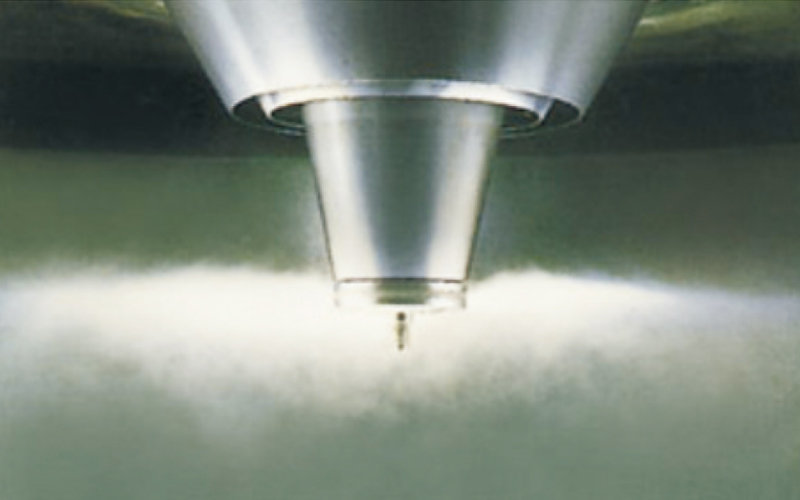
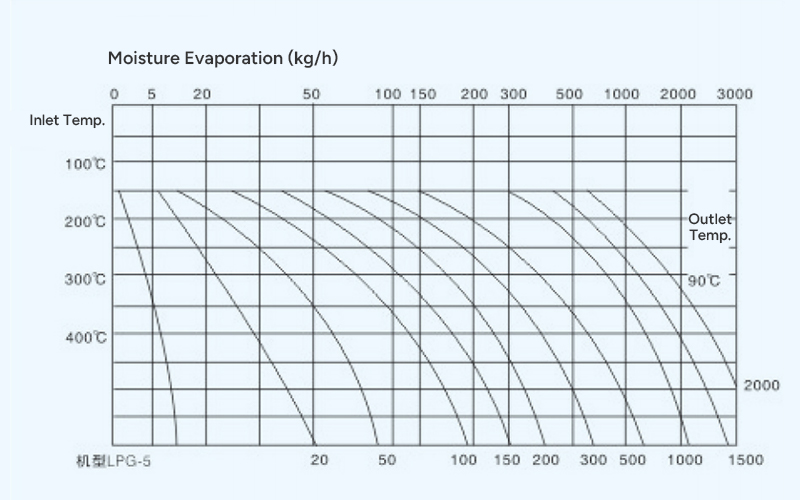
● Rapid Drying Speed: Once atomized, the surface area of the liquid feed increases drastically. Within the hot airflow, 95%–98% of moisture evaporates almost instantaneously, completing the drying cycle in just a few seconds.
● Ideal for Heat-Sensitive Feeds: Highly suitable for thermosensitive materials, delivering end products with excellent uniformity, flowability, solubility, high purity, and consistent quality.
● Simplified Process & Easy Control: Liquids with 40%–60% moisture (up to 90% for specific materials) are directly converted into powders or granules in a single pass. Eliminating the need for post-drying crushing and screening reduces processing steps and prevents contamination. Particle size, bulk density, and residual moisture are easily regulated within specified parameters.
High-Speed Centrifugal Atomization: Disperses liquid feed into fine droplets for rapid moisture evaporation.
Rapid Drying Process: Converts suitable liquid materials into powder within seconds.
Wide Material Compatibility: Processes solutions, emulsions, suspensions, and pumpable pastes.
Adjustable Drying Conditions: Automatically controls inlet air temperature, with outlet temperature monitored and adjusted according to material requirements.
Flexible Production Capacity: Available in multiple configurations with different water evaporation capacities.
Efficient Powder Collection: Approximately 95% powder recovery is listed in the published equipment specifications; actual performance depends on material properties and collection configuration.
Customizable Heating Systems: Electric, steam, and other suitable heating arrangements can be selected according to production requirements.
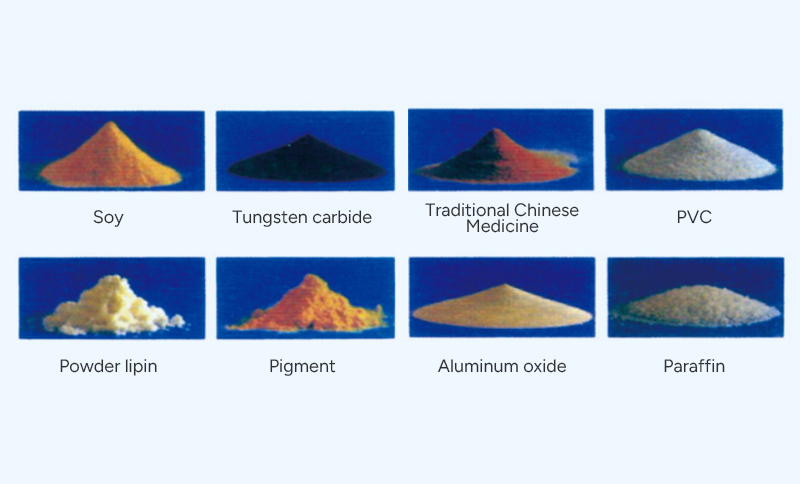
Food & Ingredients
In the food industry, an industrial centrifugal spray dryer is widely used to convert liquid ingredients, extracts, and concentrates into free-flowing powders for convenient storage, handling, and transportation. Typical applications include milk powder, egg powder, coffee and tea extracts, protein powder, amino acids, vitamins, seasonings, fruit and vegetable juice powders, yeast, starch, glucose, and pectin. For food-grade spray drying applications, material-contact surfaces, equipment cleaning procedures, and relevant food safety requirements should be considered when configuring the spray drying machine.
Ceramics
In ceramic manufacturing, a high speed centrifugal spray dryer is used to transform prepared ceramic slurries into granulated powders for subsequent forming and processing operations. Typical materials include alumina, zirconia, magnesium oxide, titanium dioxide, magnesium titanate, kaolin, china clay, ferrites, and other metal oxide suspensions. The centrifugal atomization and drying parameters can be selected according to slurry viscosity, solid content, and production targets. Granule size distribution, bulk density, and flowability are important considerations when configuring an industrial spray drying system for ceramic powder production.
Chemical Products
For chemical manufacturing, the LPG centrifugal spray dryer can be configured to process suitable chemical solutions, suspensions, and liquid mixtures into dry powders with application-specific particle characteristics. Common materials include poly aluminum chloride (PAC), disperse and reactive dyes, organic catalysts, silica, white carbon black, detergent formulations, zinc sulfate, sodium metasilicate, calcium carbonate, potassium fluoride, and other inorganic compounds. When selecting centrifugal spray drying equipment for chemical applications, manufacturers should evaluate feed composition, corrosion characteristics, operating temperatures, and exhaust gas treatment requirements to determine the appropriate equipment configuration.
| Item \ Type | 5 | 25 | 50 | 100 | 150 | 200 | 500 | 800 | 1000 | 2000 | 3000 | 4500 | 6500 |
| Inlet temperature (℃) | 140-350 Automatically controlled | ||||||||||||
| Outlet temperature (℃) | 80-90 | ||||||||||||
| Way of atomizing | High speed centrifugal atomizer (Mechanical drive or stepless frequency regulation available) | ||||||||||||
| Water evaporation capacity (kg/h) | 5 | 25 | 50 | 100 | 150 | 200 | 500 | 800 | 1000 | 2000 | 3000 | 4500 | 6500 |
| Speed of atomizer (rpm) | 35000 | 20500 | 17600 | 15500 | 11570 | 10983 | |||||||
| Diameter of atomizing tray (mm) | 50 | 108 | 120 | 130 | 150 | 190 | 210 | 240 | |||||
| Max Electric heating power (kW) | 15 | 36 | 63 | 81 | 99 | Equipped with other heat sources | |||||||
| Dried powder recovery rate (%) | Around 95 | ||||||||||||
| Length of covered area (m) | 1.9 | 4 | 4.5 | 5.2 | 7 | 7.5 | 12.5 | 13.5 | 14.5 | Decided in accordance with the flow chart, condition of field and requirements of customers | |||
| Width of covered area (m) | 1.1 | 2.7 | 2.8 | 3.5 | 5.5 | 6 | 8 | 12 | 14 | ||||
| Height of tower body (m) | 2.2 | 4.5 | 5.5 | 6.7 | 7.2 | 8 | 10 | 11 | 15 | ||||
| Hoisting height of nozzle (m) | -- | 2.5 | 2.5 | 3.2 | 3.2 | 3.2 | 3.2 | 3.2 | 3.2 | ||||
Notes: The evaporated amount of moisture is concerned with characteristics of raw material, solid content and temperature of hot air inlet and outlet. Users can select heating in accordance with the conditions of local energy source and the way of dust removing in accordance with the characteristics of raw material.
1. What is a high speed centrifugal spray dryer?
A high speed centrifugal spray dryer is an industrial drying machine that uses a rotating atomizer to disperse liquid materials into fine droplets. The droplets contact heated air inside a drying chamber, allowing rapid moisture evaporation and powder formation.
2. What materials can an LPG spray dryer process?
The LPG series can process suitable solutions, emulsions, suspensions, and pumpable pastes. Typical applications include food ingredients, dairy products, chemical materials, ceramic slurries, and selected pharmaceutical intermediates.
3. What is the water evaporation capacity of the LPG series?
The published LPG series covers water evaporation capacities from 5 kg/h to 6,500 kg/h. The appropriate model depends on the feed material's moisture content, solid content, and required final powder specifications.
4. What is the difference between feed capacity and water evaporation capacity?
Feed capacity refers to the total amount of liquid material entering the dryer per hour. Water evaporation capacity refers to the amount of moisture removed per hour. Finished powder output refers to the amount of dry product collected. These three values are different and should be considered separately when selecting equipment.
5. How does centrifugal atomization work?
A high-speed rotating disc disperses the liquid feed into fine droplets through centrifugal force. The droplets then come into contact with heated air, allowing rapid moisture evaporation.
6. Is the LPG spray dryer suitable for heat-sensitive materials?
Spray drying offers a short drying time, making it suitable for evaluating many heat-sensitive liquid materials. However, suitability depends on the material's thermal stability, drying temperature, residence time, and required product quality. Testing is recommended for sensitive ingredients.
7. What is the powder recovery rate of the LPG spray dryer?
The published equipment specifications list a powder recovery rate of approximately 95%. Actual recovery depends on particle size, material characteristics, powder collection configuration, and operating conditions.
8. What heating sources are available?
The LPG series supports electric and steam heating configurations, with other suitable heat sources available according to the equipment size and project requirements.
9. Can the LPG centrifugal spray dryer be customized?
Yes. The equipment can be configured according to evaporation capacity, atomizer type, heating source, material characteristics, powder collection requirements, and plant layout.
10. How do I select the correct LPG spray dryer model?
Provide the material name, initial solid content, required feed rate, target powder moisture, and available heating source. These details allow the engineering team to calculate the approximate evaporation requirement and recommend a suitable equipment configuration.