


Changhai vacuum dryers process powders, pastes, filter cakes, and solvent-containing materials in a sealed chamber. By lowering pressure to reduce moisture or solvent boiling points, our systems enable flexible temperature control for both low-temperature and high-efficiency vacuum operations.
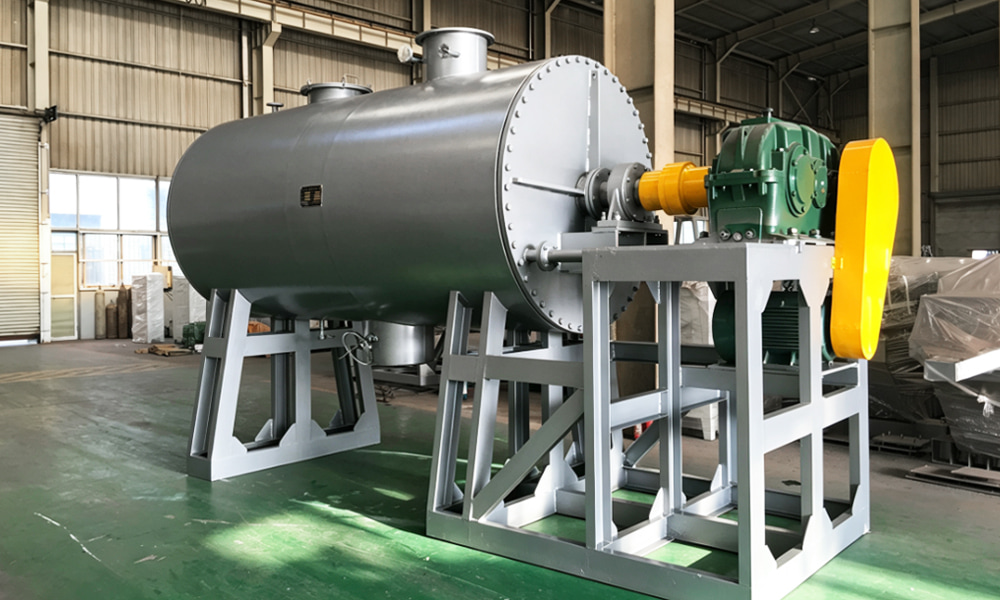
Main Vacuum Dryer Types

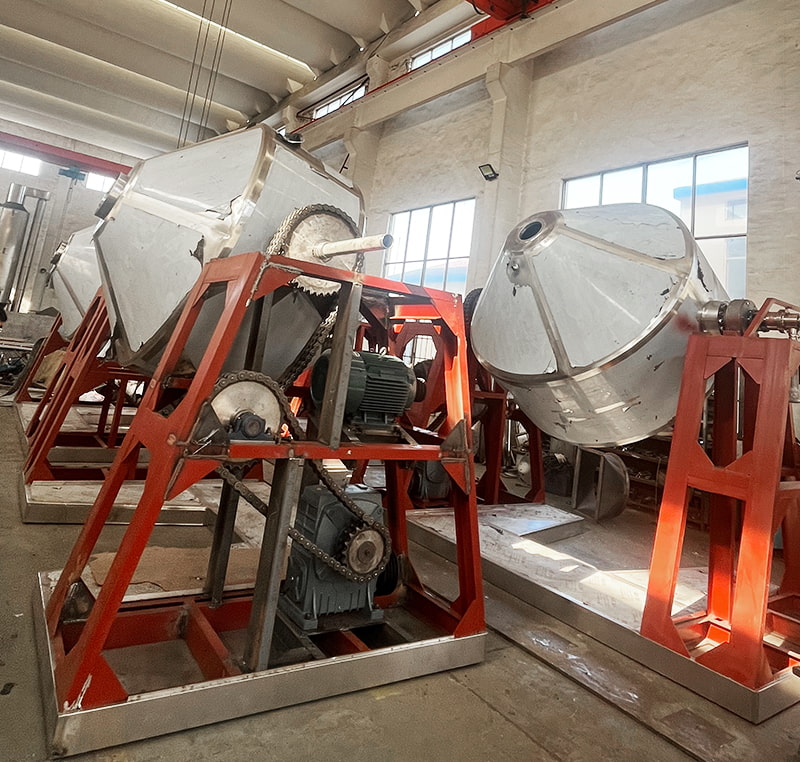
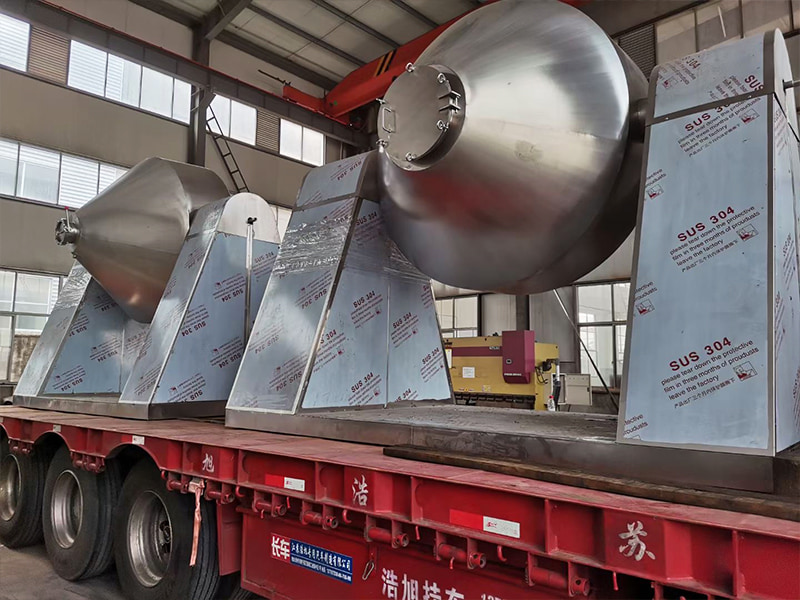
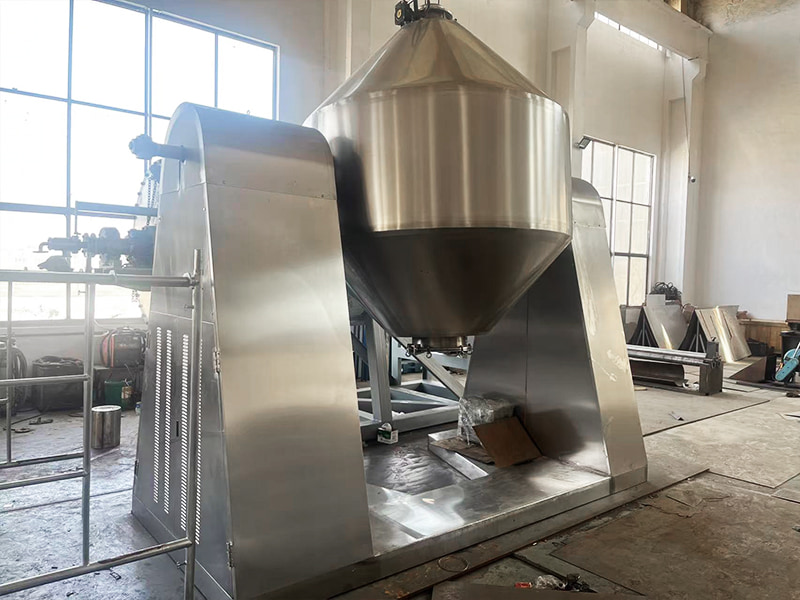
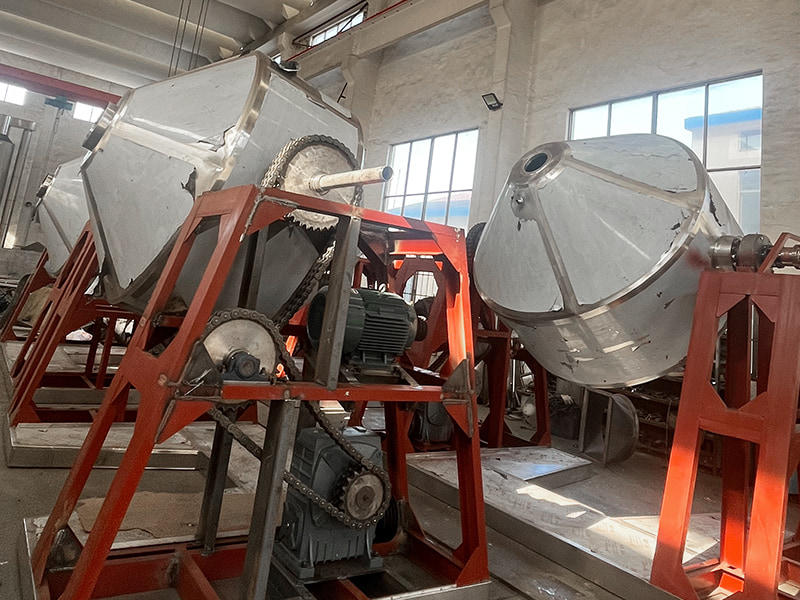
Gentle vessel rotation with indirect jacket heating for powders, granules and crystals.
Let heat source (for example, low pressure steam, ir heat conduct oil) pass through the sealed jacket. The heat will be transmitted to raw material to be ried through inner shell; Under driving of power, the tank is rotated slowly and the raw material inside it is mixed continuously. The purpose of reinforced bdrying can e realized.

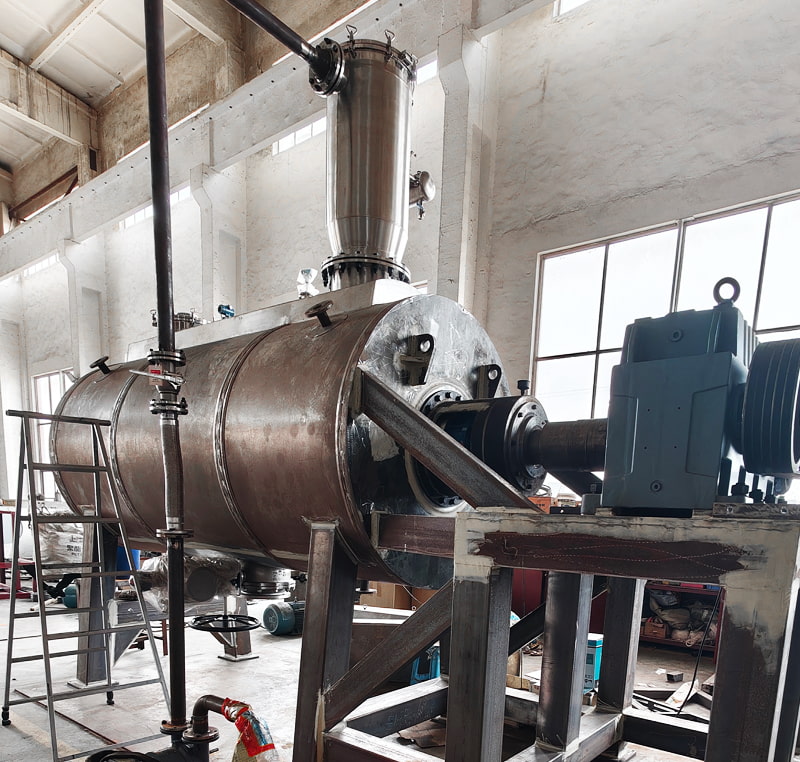
Horizontal batch vacuum drying with stirring for powders, pastes, slurries and filter-cake materials.

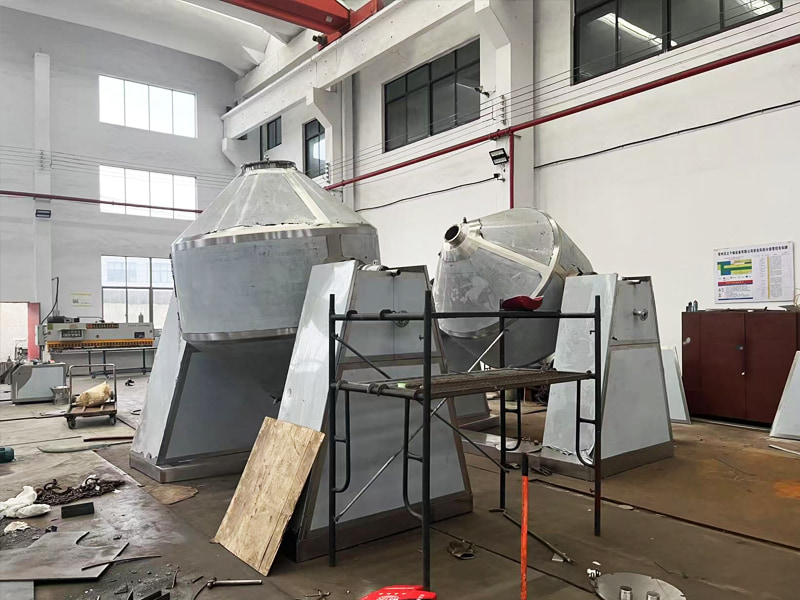
Conical vacuum drying and spiral-ribbon mixing in a closed vessel.
LDG series spiral belt vacuum dryer is a multifunctional fully closed vertical vacuum drying equipment integrating drying, crushing and powder mixing. Its drying efficiency is 3-5 times that of the "double cone rotary vacuum dryer" of the same specification. It is mainly used for powder drying in pharmaceutical, chemical, pesticide, food and other industries. It can realize the whole process of closed continuous operation. It is the drying equipment in the above industries.

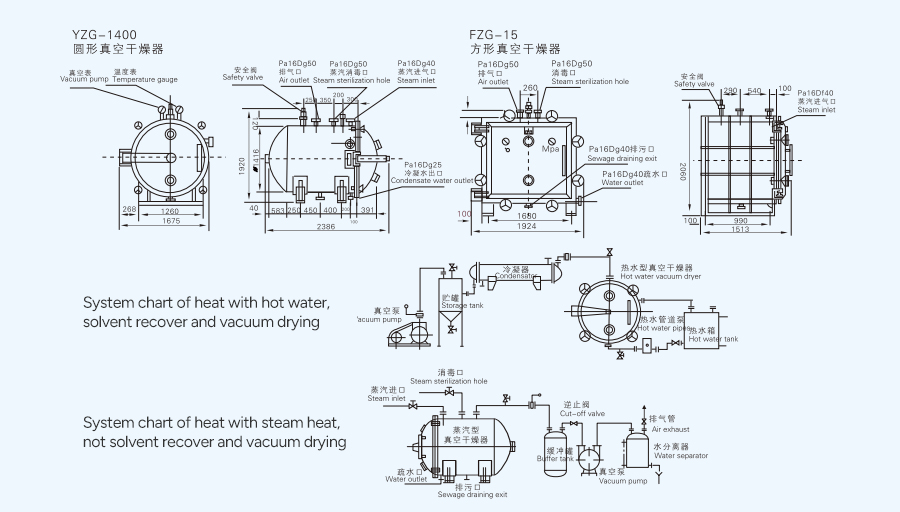
Round or square static tray-type vacuum drying for small batches, multiple products and heat-sensitive materials.

The utility model has the advantages of reasonable structure, convenient maintenance, low cost, automatic control and convenient operation, and self-setting of freeze-drying curve.
Vacuum-Drying Process Overview
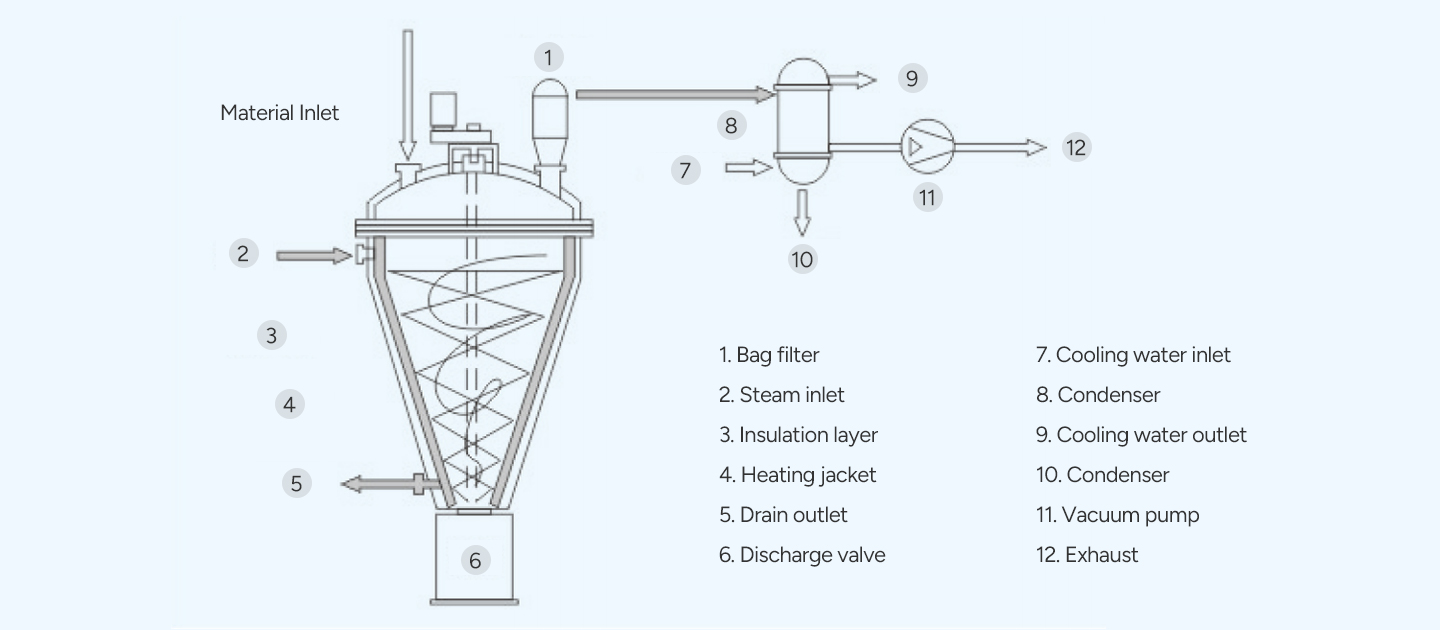
Moisture or solvent evaporates at the selected vacuum level and operating temperature and is removed by the vacuum system. Vessel rotation, rake stirring, spiral-ribbon mixing or tray loading provides the material movement required by each product.
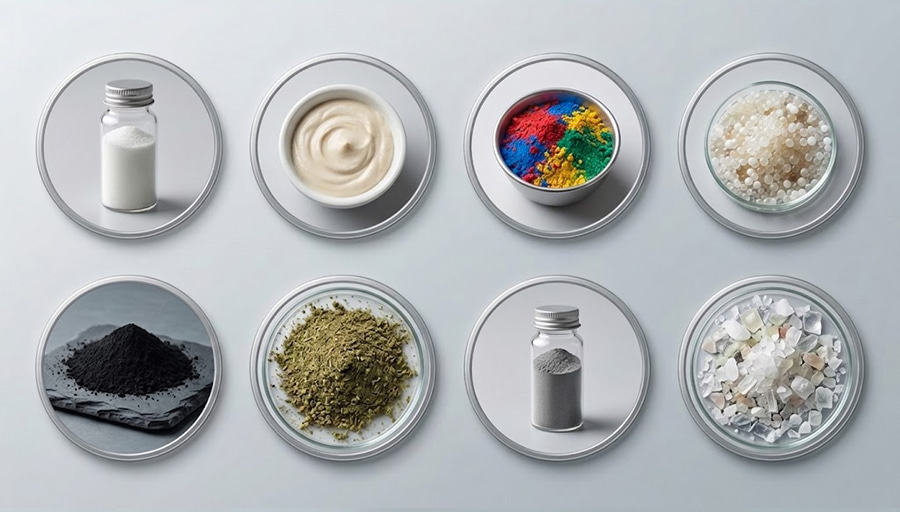
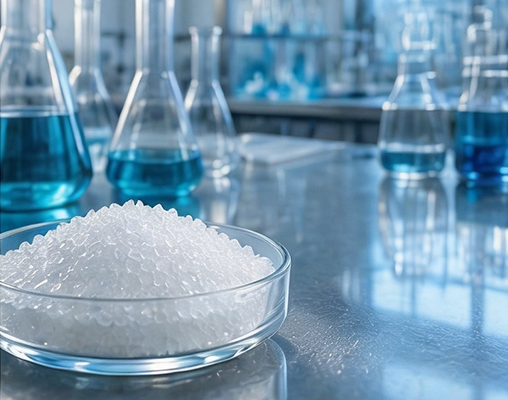
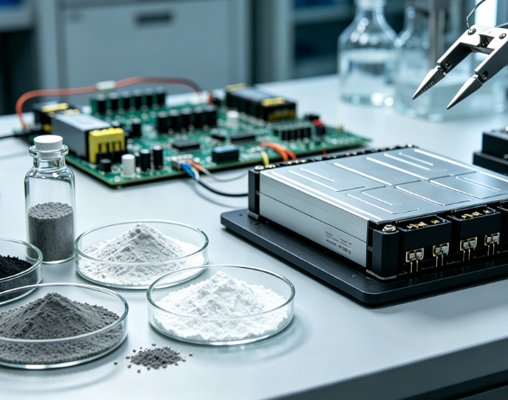
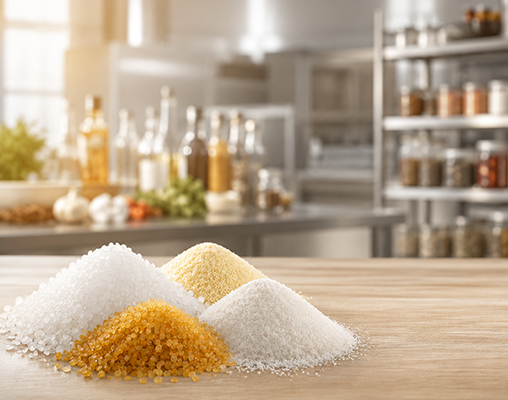
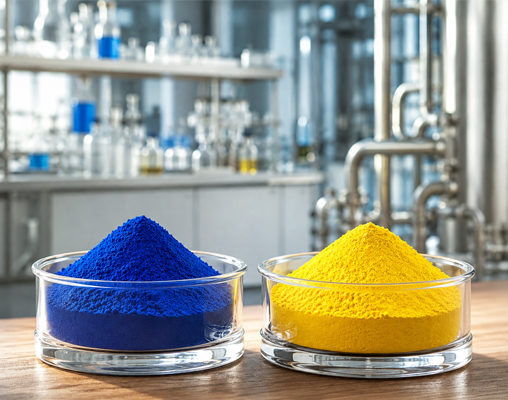
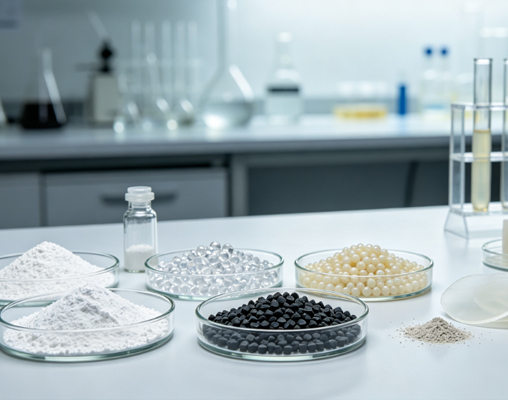
Typical materials include pharmaceutical and chemical intermediates, food products, electronic materials, resins, pigments, dyes, salts and extracts.
Material form, solvent, thermal behavior, corrosion, stickiness, target moisture, batch capacity, heat source, vacuum level and discharge characteristics determine the appropriate dryer and system configuration.

Key Advantages of Changhai Vacuum Dryers

Flexible Temperature Control
Reduced chamber pressure lowers moisture or solvent boiling points, broadening operating temperature-control options.

Sealed & Contamination-Free
Fully sealed processing minimizes direct exposure to ambient air, preventing material contamination, oxidation, and dust leakage.

Gentle Tumbling Drying
The SZG series provides gentle rotary tumbling and indirect jacket heating, ideal for free-flowing powders, granules, and crystals.

Active Stirring for Pastes
The ZPG series features mechanical rake stirring and continuous surface renewal for powders, pastes, slurries, and filter cakes.

Conical Mixing & Drying
The LDG series combines high-efficiency spiral-ribbon mixing and vacuum drying within a single, hygienic conical vessel.

Static Multi-Batch Drying
The YZG/FZG series provides static tray-type drying optimized for small-batch operations, multi-product recipes, and delicate feeds.

Integrated Solvent Recovery
Condensation and solvent recovery modules can be seamlessly integrated into the vacuum system for safe and efficient recycling.
Vacuum Dryer Selection Guide
Vacuum-dryer selection is based on material form, flowability, viscosity, solvent content, material movement, heat-transfer method, batch capacity, and discharge condition.
| Model Series | Material Form & Movement | Application & Features |
|---|---|---|
| SZG Series | Free-flowing powders, granules, and crystals. | Suited to materials requiring gentle tumbling, uniform indirect heating, and low-shear processing. |
| ZPG Series | Powders, pastes, slurries, and filter cakes. | Suited to high-viscosity or paste materials requiring continuous rake stirring and repeated surface renewal. |
| LDG / Single-Cone | High-value APIs, fine powders, and sensitive products. | Combines conical vacuum drying with efficient spiral-belt mixing in a single closed vessel for sterile or GMP operations. |
| YZG / FZG Series | Tray-loaded, multi-product, and heat-sensitive materials. | Suited to static small-batch processing, multi-recipe production, and materials prone to deformation or oxidation. |
Vacuum Dryer FAQ
Q: When is vacuum drying suitable?
A: Vacuum drying is suitable when a lower boiling point, reduced exposure to air, sealed processing or dedicated vapor handling is required.
Q: Is vacuum drying limited to low temperatures?
A: No. Vacuum lowers the boiling point, while the actual operating temperature is selected according to the material, heat source and equipment range.
Q: Can a vacuum dryer recover solvent?
A: Yes. Condensation and recovery equipment can be integrated according to the solvent, operating conditions and recovery target.
Q: How do SZG and ZPG differ?
A: SZG tumbles free-flowing powders, granules and crystals, while ZPG stirs powders, pastes, slurries and filter cakes.
Q: Which dryer suits tray-loaded products?
A: YZG/FZG static vacuum dryers are designed for tray-loaded, small-batch, multi-product and heat-sensitive materials.
Q: What information is required for quotation?
A: Provide the material/form, solvent, moisture target, batch size, heat source, operating conditions, vapor handling and discharge requirements.