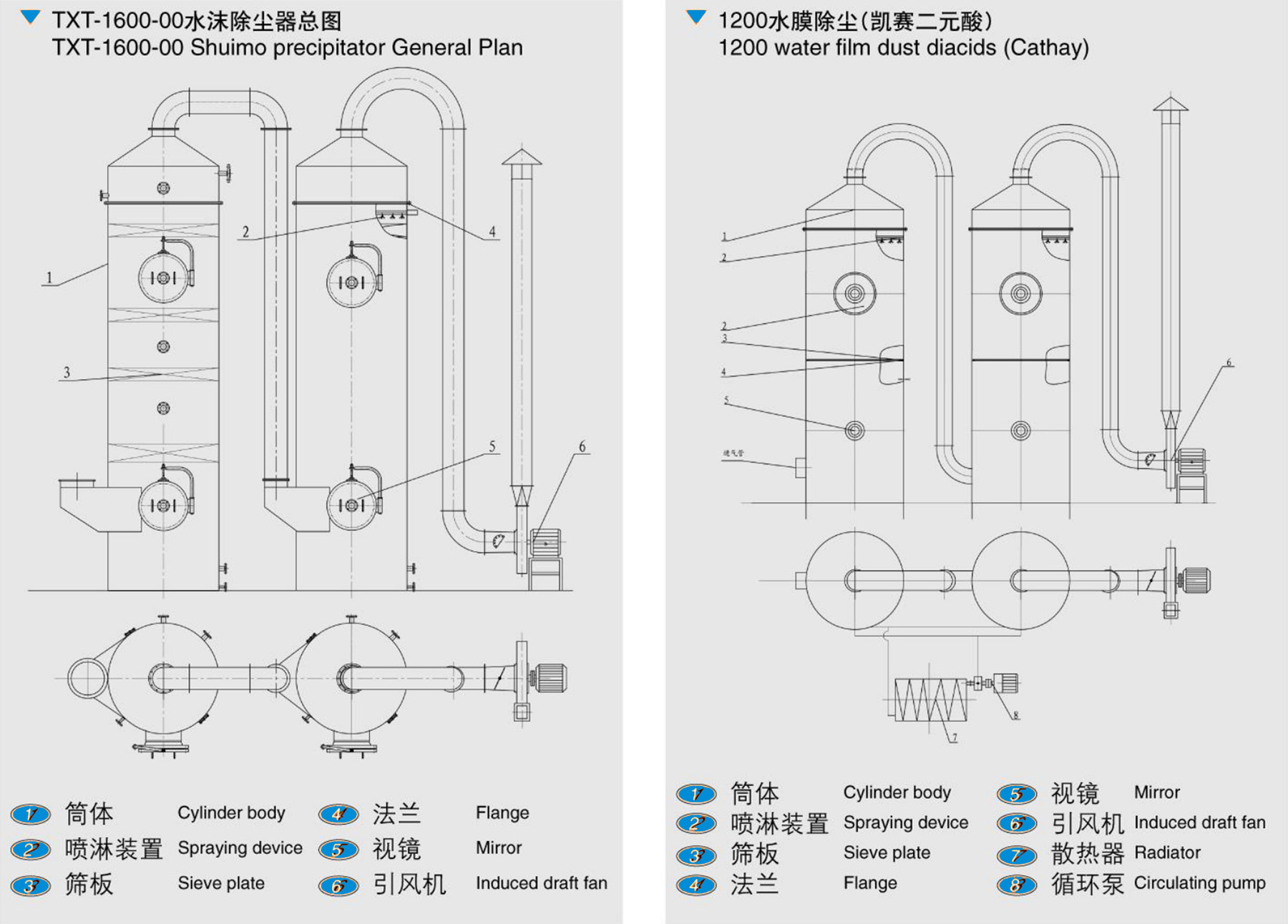


Water film packed absorption tower as a gas-liquid mass transfer separation equipment, has been widely used in the chemical, petrochemical, pharmaceutical, pesticide and environmental protection industries absorption operation.
Water film packed absorption tower as a gas-liquid mass transfer separation equipment, has been widely used in the chemical, petrochemical, pharmaceutical, pesticide and environmental protection industries absorption operation. The absorption process can be used for the separation of the mixed gas in the chemical apparatus, the raw material gas purification, recovery of a component in the mixed gas, preparation of chemical products, etc. process.
In the operation of the absorption process, the choice of appropriate solvents, the one or more gases in the gas mixture is dissolved in a solvent, to achieve the mixed gas separation purposes.
Absorption operation is usually divided into physical absorption and chemical absorption. The physical absorption solute gas is dissolved in a solvent, significant chemical reaction does not occur between the solute and solvent. For example, crude benzene wash oil recovery of gas pressure washing the decarburization, propylene carbonate decarburization etc.. As the solute is dissolved with increasing pressure or the temperature decreases, so physical absorption is often carried out in a high pressure low temperature.
Chemical absorption refers to the solute and solvent absorption process of a chemical reaction, for example, removal of carbon dioxide and other hot potassium Alkaline. The chemical absorption the temperature and pressure of operation of the absorption reaction mainly depends on the conditions under gas phase equilibrium and chemical equilibrium, and is conducive to the chemical reaction rate increases due to increased temperature, the chemical absorbent is usually carried out under a higher pressure and temperature.
1. The absorption operation is usually carried out in a low temperature underhigh pressure;
2. The absorption operation is a variable temperature process;
3. Viscosity, and diffusion coefficients affect the absorption efficiency;
4. Desorption operation at high temperature and low pressure operation;
5. The flashing process.
1. Countercurrent flow;
2. The absorbent liquid recirculating flow;
3. Multi-tower countercurrent series of processes;
4. Sub-absorption and regeneration processes.