

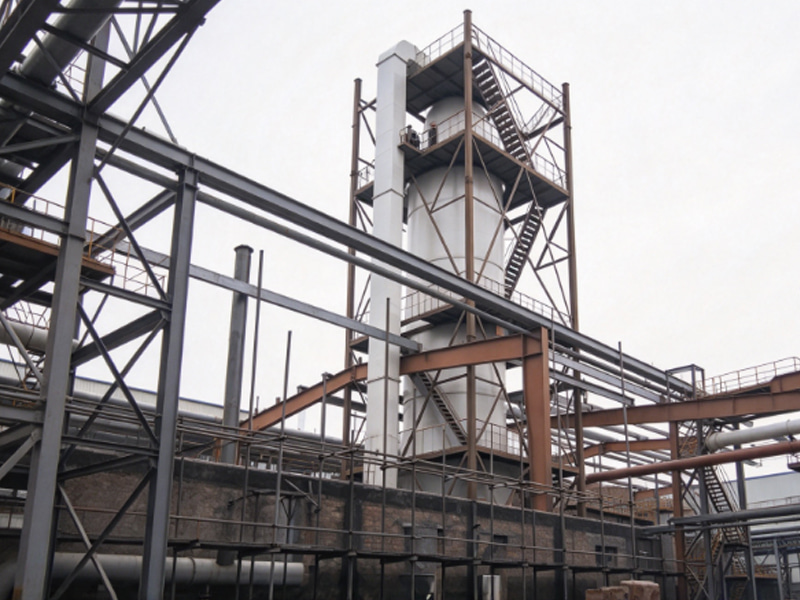
The YPG Series Pressure Spray Dryer is an advanced industrial drying and granulation machine designed to convert liquid materials into dry powders or uniform granules. As a reliable pressure spray dryer, it uses a high-pressure pump and specialized spray nozzle to atomize liquid feed into fine droplets, which are rapidly dried through contact with hot air. This pressure spray granulating dryer is suitable for chemical, pharmaceutical, food, ceramic and fertilizer industries. Changhai provides industrial spray drying equipment with flexible configurations to meet different material characteristics, production capacities and drying requirements.
The YPG Series Pressure Spray Dryer is an industrial drying and granulation system designed to convert pumpable liquid materials into dry powders or spherical granules.
Using a high-pressure pump and pressure nozzle, the system atomizes liquid feed into fine droplets inside the drying chamber. These droplets come into contact with hot air, allowing moisture to evaporate rapidly and forming dry particles.
The YPG pressure spray drying system is suitable for chemical, pharmaceutical, food, ceramic and fertilizer production processes where controlled particle formation and efficient moisture removal are required.
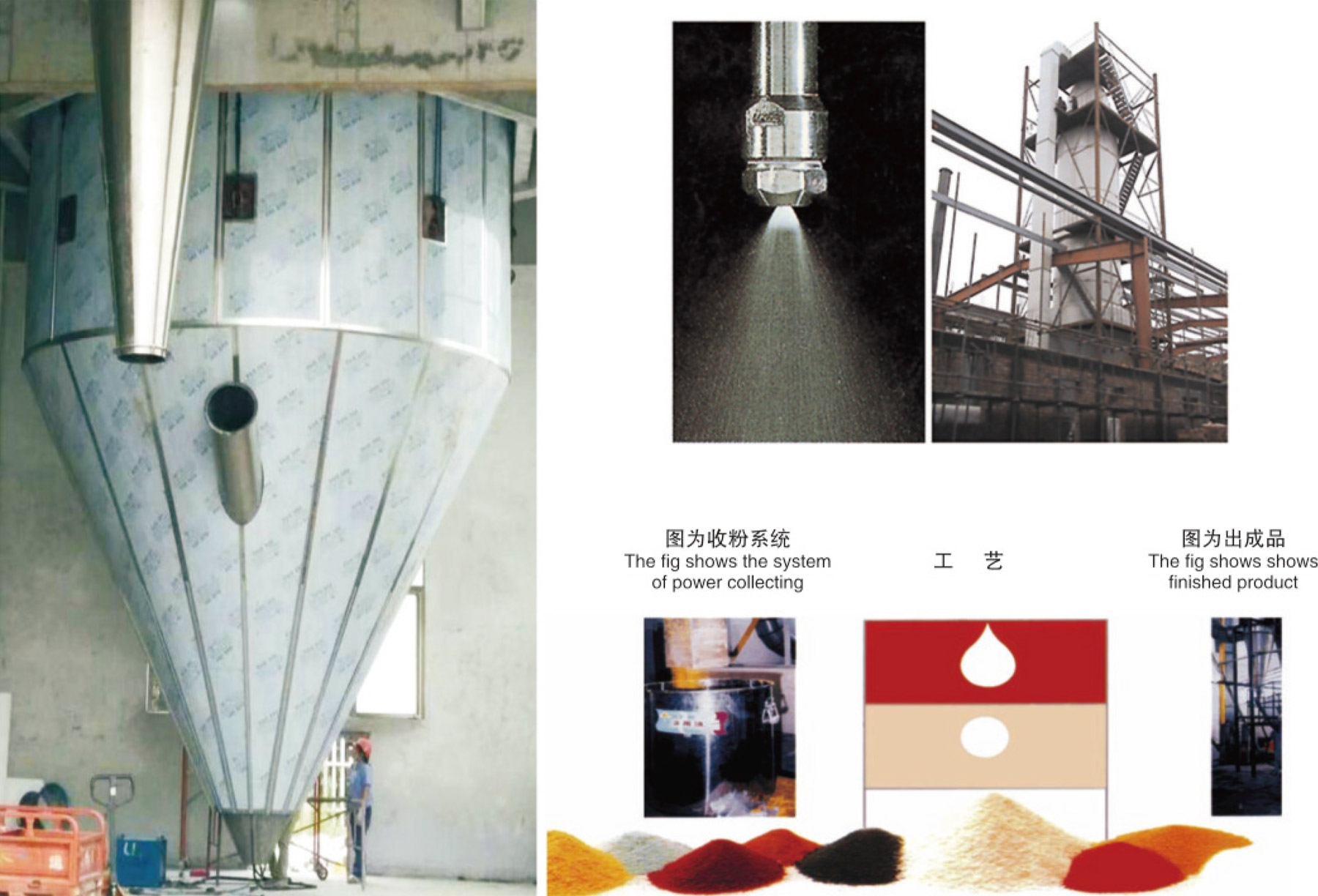
The YPG Series Pressure Spray Dryer operates by atomizing liquid feed into fine droplets under high pressure. The feed liquid is delivered to the pressure nozzle by a diaphragm pump, where it is converted into a fine spray and introduced into the drying chamber. The droplets come into direct contact with hot air, enabling rapid moisture evaporation and forming dry powder particles.
The dried powder settles at the bottom of the drying tower and is discharged through the outlet. Meanwhile, the exhaust air carrying fine powder particles enters a cyclone separator, where solid particles are separated from the gas stream and collected through the cyclone's lower discharge outlet. The cleaned exhaust air is then discharged by an induced-draft fan. For enhanced dust control and powder recovery, a secondary dust collection system can be installed at the fan outlet.
With an optimized powder collection system, the pressure spray drying system can achieve a material recovery rate of approximately 96–98%, depending on material properties and operating conditions.
1. Rapid Drying and High Thermal Efficiency
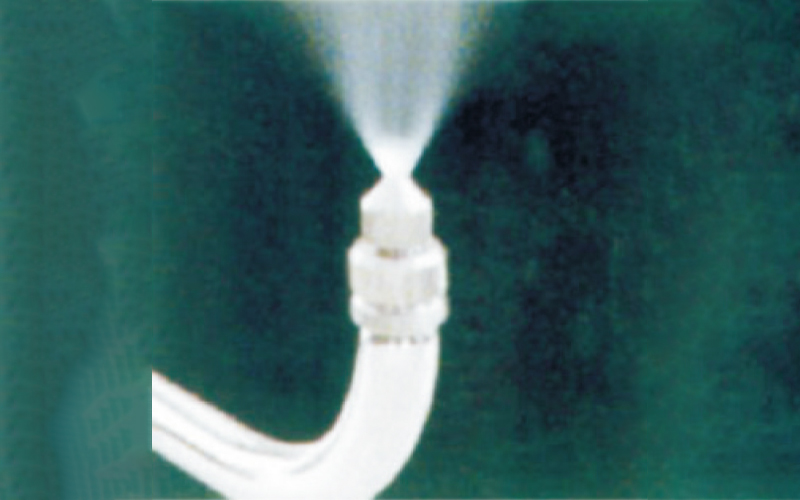
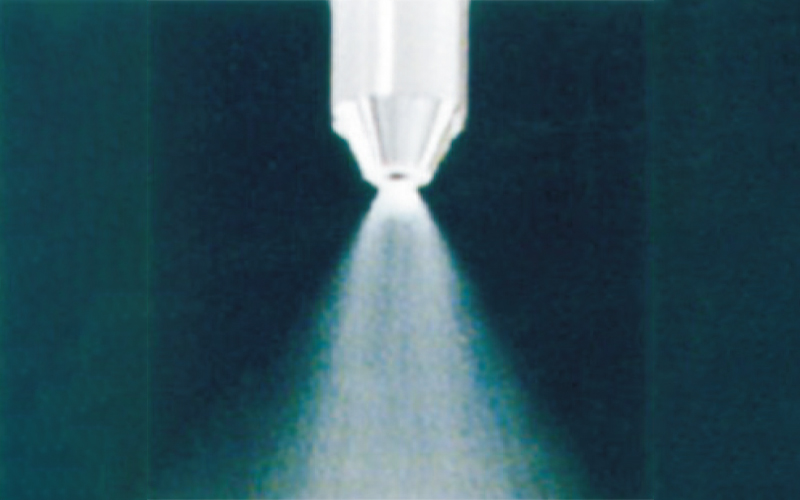
The YPG pressure spray dryer offers rapid moisture evaporation by atomizing liquid feed into fine droplets, significantly increasing the contact surface area between the material and hot air. Under suitable operating conditions, moisture can be removed within seconds, with typical drying times ranging from several seconds to tens of seconds. This rapid drying process makes the industrial spray dryer particularly suitable for heat-sensitive materials that require short exposure to elevated temperatures.
2. Uniform Spherical Particles and Excellent Product Quality
The pressure spray granulation process helps produce spherical particles with relatively uniform particle size distribution. The resulting powder features good flowability, solubility and handling characteristics, making it suitable for applications where consistent particle properties and product quality are important.
3. Wide Material Compatibility and Flexible Processing
The YPG pressure spray drying machine offers flexible processing options for different material characteristics and production requirements. Depending on the feed properties and desired final product, the system can be configured for hot-air spray drying or cold spray granulation processes. This flexibility makes it suitable for a wide range of applications in the chemical, pharmaceutical, food, ceramic and fertilizer industries.
4. Easy Operation and Automated Process Control
Designed for stable and convenient operation, the YPG industrial spray drying system features a straightforward operating process and accessible control functions. Its configuration can support automated operation, helping reduce manual intervention, improve process consistency and simplify routine production management.
The YPG Series Pressure Spray Dryer is widely used in the food, pharmaceutical, chemical, ceramic, biochemical and agricultural chemical industries. It is suitable for drying and granulating liquid materials with appropriate flowability, helping convert liquid feed into dry powders or granules with controlled particle characteristics. Depending on material properties and production requirements, the system can also be configured for spray granulation, spray cooling, spray crystallization, spray concentration and spray reaction processes.
1. Chemical Industry
The industrial pressure spray dryer is suitable for processing various chemical solutions, suspensions and liquid formulations, including catalysts, synthetic resins, synthetic detergents, ammonium sulfate, dyes, dye intermediates, precipitated silica (white carbon black), graphite and ammonium phosphate.
2. Food Industry
For food processing applications, the pressure spray drying system can be used to dry liquid food ingredients and extracts, such as amino acids and their derivatives, food seasonings, proteins, starch, dairy products, coffee extracts, fish meal and meat flavoring ingredients.
3. Pharmaceutical Industry
The YPG pressure spray dryer can be applied to the drying and granulation of suitable pharmaceutical materials, including traditional Chinese medicine extracts, pharmaceutical intermediates, antibiotic-related materials and medicinal granules. Processing conditions should be selected according to the thermal sensitivity and physical properties of each material.
4. Ceramic Industry
In ceramic manufacturing, the pressure spray granulation dryer is suitable for preparing ceramic powders and granules from liquid suspensions. Typical materials include magnesium oxide, porcelain clay, metal oxides and dolomite. The resulting granules can be used in subsequent forming and processing operations.
5. Fertilizer and Agricultural Chemical Industry
The spray granulation system can process various fertilizer formulations and inorganic materials, including compound fertilizers, alumina and other suitable powdered or granular chemical products. It is also applicable to selected pesticide formulations and agricultural chemical intermediates.
6. Spray Granulation Applications
Beyond conventional spray drying, the YPG system can be configured for spray granulation processes to produce granular materials with application-specific particle size and flow characteristics. Typical applications include fertilizers, ceramic powders, pharmaceutical granules, heavy-metal compounds, granular detergents and other inorganic materials.
7. Spray Cooling and Other Specialized Processes
For materials that require cooling or solidification rather than conventional hot-air drying, spray cooling granulation can be used for suitable substances such as fatty acids, paraffin wax, glycerides and animal fats. Related spray processing technologies also include spray crystallization, spray concentration and spray reaction, depending on the material characteristics and equipment configuration.
| Type | Unit | 50 | 100 | 150 | 200 | 300 | 500 | 1000 |
| Evaported amount | kg | 50 | 100 | 150 | 200 | 300 | 500 | 1000 |
| Overall dimensions (Φ×H) | mm | 1600×8900 | 2000×11500 | 2400×13500 | 2800×14800 | 3200×15400 | 3800×18800 | 4600×22500 |
| High-pressure pump pressure | Mpa | 2 ~ 10 | ||||||
| Power | KW | 8.5 | 14 | 22 | 24 | 30 | 82 | 30 |
| Inlet temperature | ℃ | 140 ~ 350 | ||||||
| Moisture content of product | % | |||||||
| Material recovery | % | >97 | ||||||
| Electric Heating | KW | 75 | 120 | 150 | When the temperature is below 200, according to the actual technology | |||
| Electricity+steam | Mpa+KW | 0.5+54 | 0.6+90 | 0.6+108 | 0.5+54 | 0.5+54 | 0.5+54 | 0.5+54 |
| Hot air furnace | Kcal/h | 100000 | 150000 | 200000 | 300000 | 400000 | 500000 | 1200000 |
1. How Does a YPG Pressure Spray Dryer Work?
The YPG Series Pressure Spray Dryer uses a high-pressure pump to deliver liquid feed into a pressure nozzle, where it is atomized into fine droplets. These droplets come into contact with hot air inside the drying chamber, allowing moisture to evaporate rapidly. The resulting dry particles are collected at the bottom of the drying tower, while fine powder particles are separated from the exhaust air through a cyclone separator. This process enables efficient drying and granulation in a continuous production system.
2. What Materials Can Be Processed by a Pressure Spray Granulating Dryer?
The YPG pressure spray granulating dryer is suitable for liquid materials with appropriate flowability, including solutions, emulsions and pumpable suspensions. Typical applications include chemical products, food ingredients, pharmaceutical materials, ceramic slurries, fertilizers and agricultural chemical intermediates. Common examples include dairy ingredients, amino acids, dyes, catalysts, ceramic raw materials and fertilizer formulations. The actual suitability depends on material viscosity, solids content, thermal sensitivity and required final product properties.
3. What Types of Powder or Granules Can the YPG Spray Dryer Produce?
The YPG industrial spray dryer is designed to produce dry powder or spherical granules, depending on the feed material, atomization conditions and operating parameters. Particle size distribution, moisture content, bulk density and flowability can be influenced by factors such as feed concentration, nozzle design, inlet and outlet air temperatures, and feed pressure. For specific particle size or granulation requirements, material testing and process evaluation are recommended before equipment selection.
4. How Do I Select the Right YPG Pressure Spray Dryer Model?
Selecting the right pressure spray dryer model requires evaluating the material characteristics and production requirements. Key factors include:
Material name, composition and physical properties
Feed capacity and initial moisture content
Required final moisture content
Desired powder or granule particle size
Processing temperature and heat sensitivity
Available heating source and installation conditions
Based on this information, the manufacturer can recommend a suitable YPG model, drying capacity and system configuration. Providing material samples and target production parameters can help improve equipment selection accuracy.
5. Can the YPG Pressure Spray Drying System Be Customized for Different Production Requirements?
Yes. The YPG pressure spray drying system can be configured according to material properties, production capacity and factory conditions. Customization may involve the drying chamber dimensions, pressure pump, spray nozzle, heating system, cyclone separator, dust collection equipment and automatic control system. Heating options may include electric heating, steam heating or hot-air furnace configurations, subject to the specific equipment design. Contact Changhai Drying with your material information and production requirements to discuss a suitable industrial spray drying solution.