




How to Choose a Spray Dryer for Liquid to Powder Processing
Turning a liquid feed into a stable powder sounds simple on paper, but choosing the wrong spray dryer can leave a producer with wall buildup, inconsistent moisture, and costly rework. This guide explains how the process works, which feed properties matter most, and how to match a system to a specific material and output target.
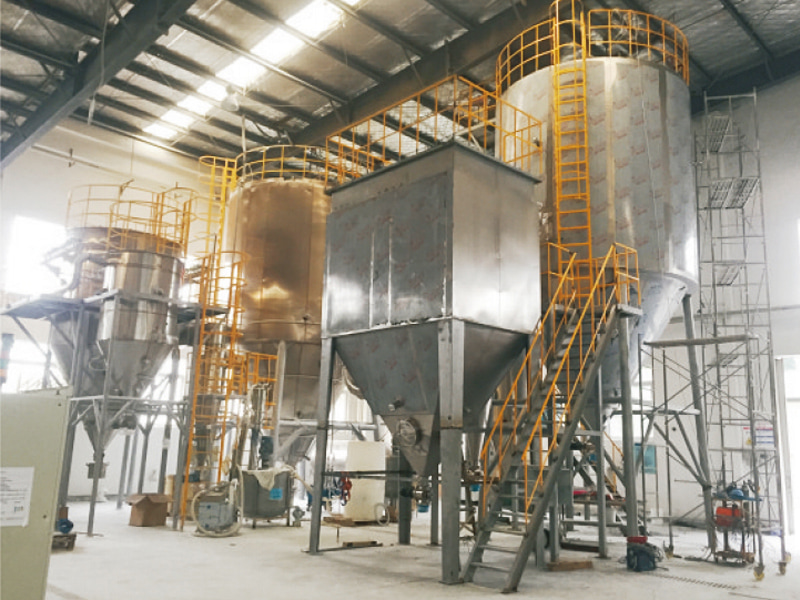
Key Takeaways
A spray dryer converts pumpable liquids into powder in one continuous step through atomization and rapid hot-air contact.
Feed viscosity, solids content, heat sensitivity and target moisture decide the atomizer, chamber size and collection setup.
Centrifugal, pressure and pilot configurations suit different feed behaviors and production scales.
Material testing before purchase confirms atomization, drying temperature and powder recovery for unfamiliar feeds.
What Is a Spray Dryer and When Is It Used
A spray dryer is a piece of industrial equipment that turns a pumpable liquid into a dry powder in a single continuous operation. The liquid is dispersed into fine droplets and brought into contact with hot air, so the water or solvent evaporates within seconds and leaves behind solid particles. This is why the technology is widely specified when a producer needs to move from a liquid, slurry or extract to a free-flowing powder without multiple batch steps.
Common feed materials include dairy liquids, coffee and tea extracts, plant and herbal extracts, protein solutions, enzymes, ceramic slurries, dyes and pigments, catalysts, and chemical intermediates. A spray dryer is generally considered when the final product needs controlled moisture, a defined particle size, and repeatable bulk density across batches. The underlying spray drying process is described in general engineering references.
How the Drying Process Works
The process follows the same physical route regardless of scale. Liquid feed is pumped to an atomizer, which breaks it into a fine mist. Heated air enters the drying chamber and meets the droplets immediately. Moisture evaporates fast, and the resulting powder is separated from the exhaust air by a cyclone separator, a bag filter, or a combination of both.
Four variables shape the outcome: how the feed is atomized, how hot and how fast the drying air moves, how long droplets stay in the chamber, and how the powder is collected. Atomization determines droplet size, and droplet size largely determines the final particle size. A finer mist dries faster and produces a finer powder, but it also asks more of the collection system. Inlet and outlet air temperatures set the driving force for evaporation; outlet temperature is especially important for heat-sensitive materials because it reflects the temperature the product actually experiences. Residence time is short, typically a matter of seconds, which is one reason the method can handle many thermally sensitive feeds when conditions are set correctly.
Main Equipment Configurations
Not every unit uses the same atomization method. The three configurations most often evaluated in industrial projects suit different feed behaviors and output goals.
Centrifugal Atomization
A centrifugal spray dryer uses a high-speed rotating wheel to fling liquid outward into droplets. It handles a broad range of pumpable solutions, emulsions and suspensions, and is a common choice for general food, chemical and industrial powder production where feed is relatively stable.
Pressure Nozzle Atomization
A pressure unit forces feed through a nozzle at high pressure. It is considered when particle size distribution or powder structure calls for pressure atomization, and it is often discussed for granulation applications.
Pilot and Laboratory Units
A small-scale or pilot system supports testing, sample production and scale-up studies. It lets a producer observe atomization behavior and measure powder recovery before investing in an industrial installation.
Two representative configurations illustrate how atomization method is matched to feed type in practice.
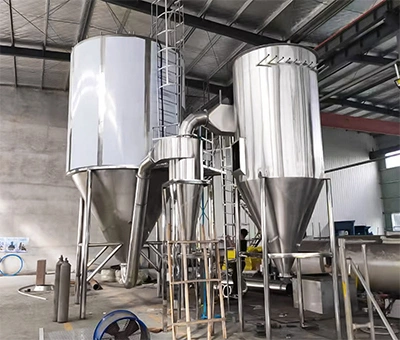
LPG High Speed Centrifugal Dryer
Designed for rapid liquid to powder conversion of pumpable solutions, emulsions and suspensions.
View Product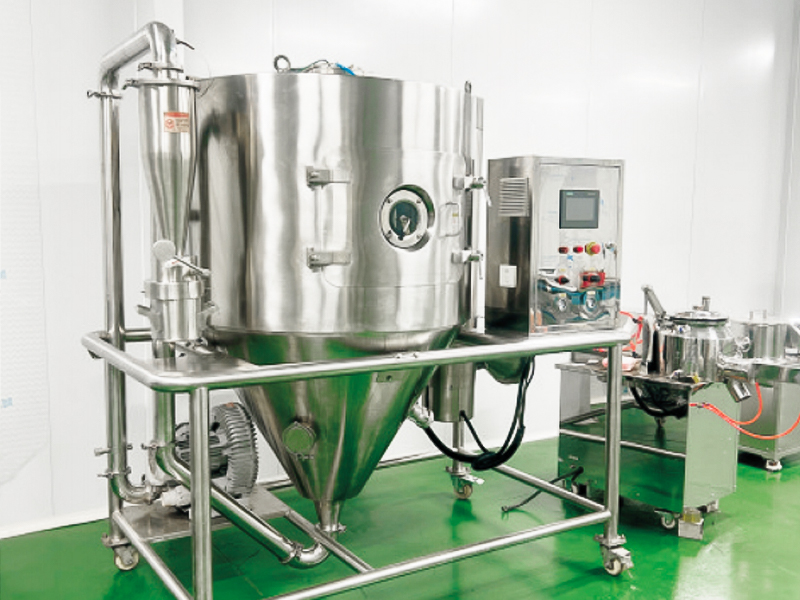
ZLPG for Herbal Extracts
Built for botanical and herbal extracts with wall-cooling and air-sweeping features to limit sticking.
View ProductCompare Configurations With an Engineering Team
Review published specifications, request feed testing, and discuss project requirements before committing to a configuration.
How to Match a Spray Dryer to the Application
Start with the feed form. If the material is a pumpable solution, emulsion or suspension, a spray dryer is a reasonable candidate. If it is a paste or filter cake that cannot be pumped, a different drying technology may fit better. Next, consider heat sensitivity: short residence time makes the process workable for many sensitive products, but outlet temperature still needs control. Finally, define the required powder, because particle size, moisture and bulk density influence both atomization and collection.
Application context also guides the choice. Food ingredients, herbal and pharmaceutical materials, and chemical powders each place different demands on hygiene, temperature control and dust handling. Industry-specific food drying solutions and pharmaceutical drying solutions illustrate how the same core process is configured differently for each sector. General guidance on drying in food processing is available from public technical references.
The Role of Testing Before Purchase
For unfamiliar or high-value feeds, a trial on a pilot unit is a practical step. Testing establishes how the liquid atomizes, which drying temperatures preserve color and activity, what powder recovery can be expected, and whether sticking is likely. These observations turn a specification into a decision based on the actual material, and they reduce the risk of sizing equipment from assumptions alone.
Key Feed and Output Parameters
Before requesting a quotation, collect measured data for the feed and the target powder. The table lists the parameters that most often drive spray dryer sizing and configuration.
| Parameter | Why it matters for a spray dryer system | Typical source |
|---|---|---|
| Feed viscosity and solids content | Controls atomization behavior and droplet size | Lab measurement of the liquid feed |
| Thermal sensitivity | Sets safe inlet and outlet air temperatures | Material datasheet or drying test |
| Target moisture content | Determines residence time and outlet conditions | Product specification |
| Particle size and bulk density | Shapes atomizer choice and collection design | Finished powder requirement |
| Evaporation duty and capacity | Drives chamber dimensions and air handling | Required hourly output |
| Solvent content | May require closed-cycle design and recovery | Feed composition |
Values in this table are selection parameters rather than fixed limits. The appropriate range depends on the specific material and the chosen model, and it should be confirmed through testing or manufacturer data.
Conclusion
Choosing a spray dryer comes down to matching the process to measured feed data: how the liquid atomizes, how much heat the product can tolerate, and what powder properties the market requires. Work through feed form, thermal sensitivity, output target and collection needs in that order, and validate the choice with a material trial whenever the feed is new or difficult.
For readers comparing spray dryer manufacturers, Changhai Drying provides published specifications, technical documentation and direct inquiry channels for further evaluation.
FAQ
What materials can a spray dryer process?
The equipment handles pumpable liquids such as solutions, emulsions, suspensions, extracts and slurries. Typical products include dairy ingredients, coffee extracts, herbal extracts, protein solutions, ceramic slurries and chemical intermediates, provided they fall within the operating range of the selected model.
How do I choose between centrifugal and pressure atomization?
The choice depends on feed characteristics, atomization requirements, particle size target and capacity. Centrifugal designs suit a wide range of stable pumpable feeds, while pressure atomization is considered when it better matches the required powder structure or particle distribution.
Can heat-sensitive materials be dried this way?
Yes. The process uses a short residence time, so many heat-sensitive feeds can be handled when inlet and outlet temperatures and airflow are correctly set. The final design should be evaluated against the specific material's thermal sensitivity, often through a drying test.
What causes wall buildup and how is it reduced?
Buildup often occurs when droplets stay soft and contact a wall above the material's softening point. It is commonly addressed by controlling wall temperature, using a wall air curtain, polishing or coating the chamber surface, and adding air-sweeping devices. Feed with high sugar or extract content benefits from these measures.
What information is needed for a quotation?
Provide the material name and feed form, viscosity, solids content, initial and target moisture, required capacity, heat source preference, target particle size and collection requirements. This data lets a supplier size the equipment and suggest a realistic configuration.